Standing Desk Stretches & Exercises: Move More Without Leaving Your Desk (2026)
As an Amazon Associate I earn from qualifying purchases. Prices and availability are accurate as of the date/time indicated and are subject to change.
🔍 How this guide was put together (Editorial Standards)
This guide compares options using published manufacturer specifications, patterns in publicly visible owner reviews, and reputable expert sources. We do not operate a physical testing lab; see our how-we-research page for details.
EDITOR'S PICKS
Top Picks
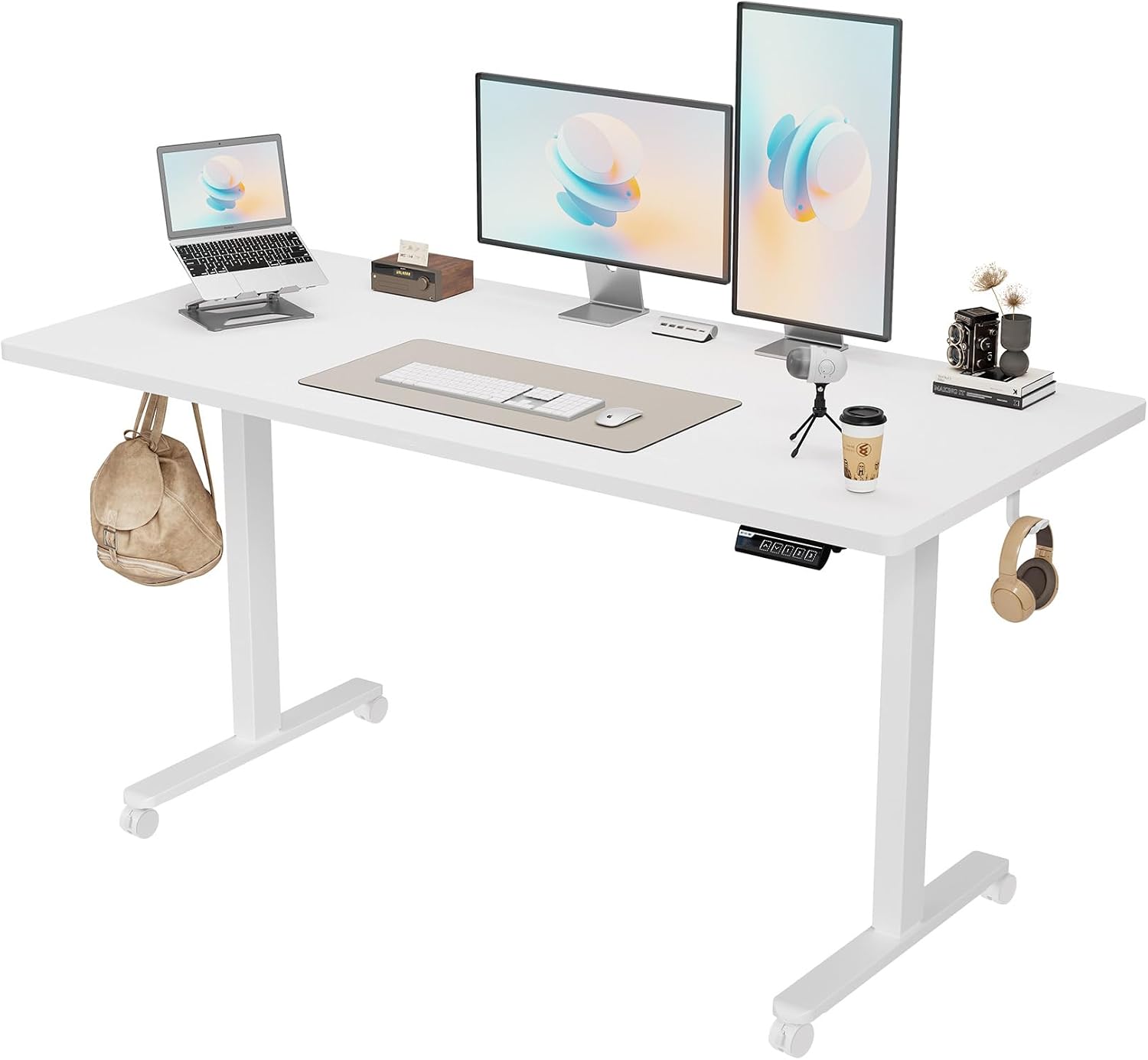
Buying a standing desk and then standing rigidly all day misses the point — the health benefit was never “standing,” it’s moving more and breaking up static posture. The best standing-desk users weave small stretches and micro-movements into the day, so their body never sets in one position. None of this needs gym clothes or a break room — here are simple stretches and desk exercises you can do in the flow of work.
Stretches for the stiff spots (neck, shoulders, back, hips)
Desk work tightens the same areas — hit them a few times a day:
- Neck & shoulders: slow neck tilts side to side, and shoulder rolls backward — undoes screen hunch.
- Chest opener: clasp hands behind your back and lift slightly — counters the forward-rounded desk posture.
- Standing back extension: hands on lower back, gently arch backward — relieves the lower back from sitting.
- Hip flexor stretch: a gentle standing lunge — hips get tight from sitting all day.
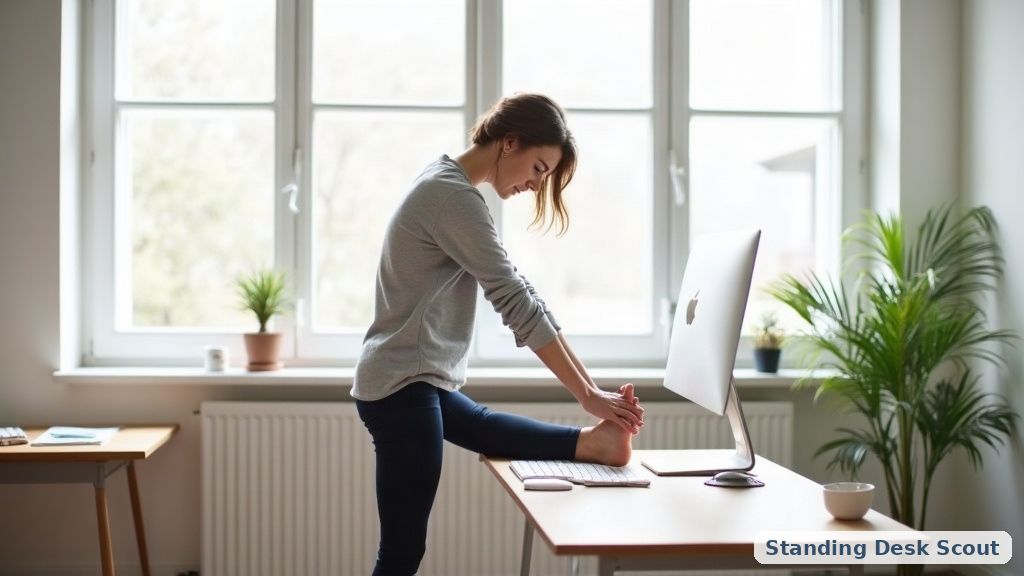
- Calf stretch: step one foot back, heel down — good especially if you stand a lot.
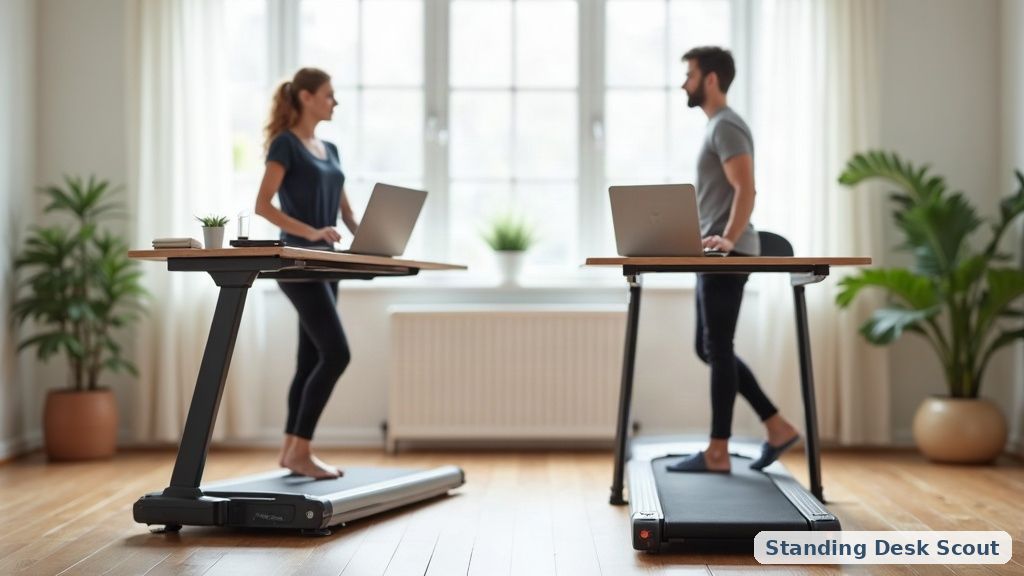
Micro-exercises between tasks
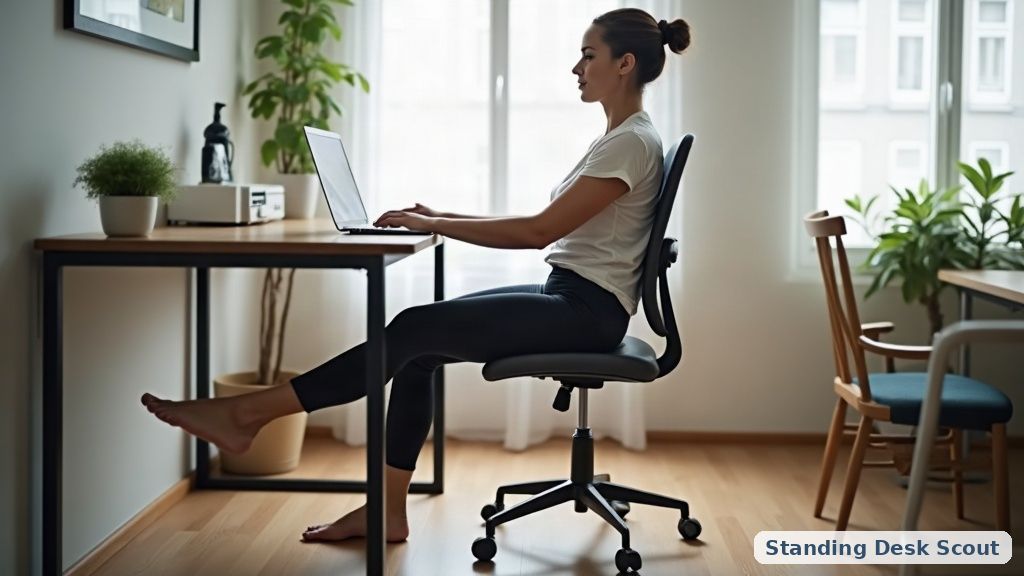
Tiny bursts that add up without a sweat:
- Calf raises while reading an email; glute squeezes on a call.
- Bodyweight squats or desk push-ups between meetings.
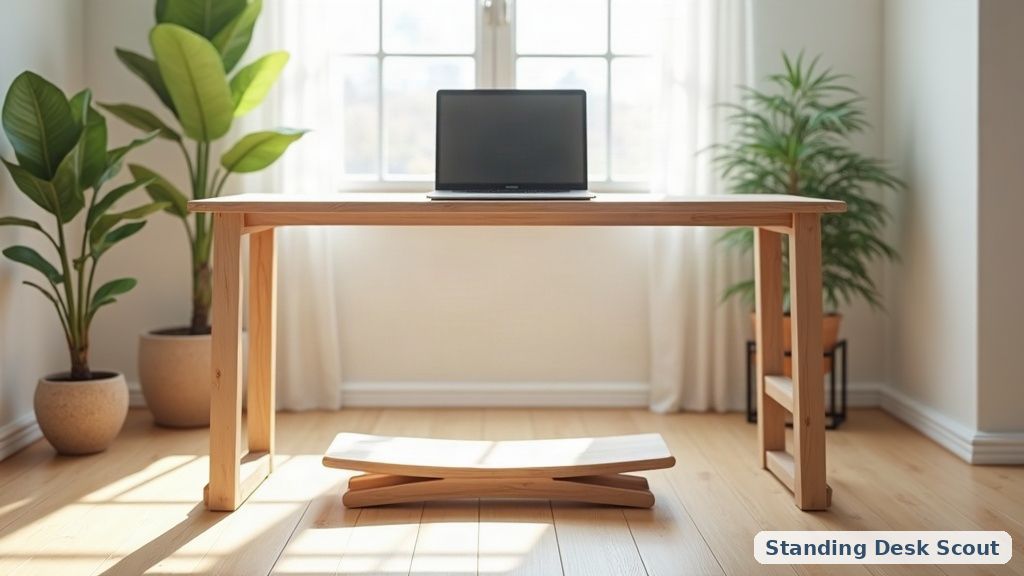
- Weight shifts and gentle marching while you stand — movement matters more than standing still.
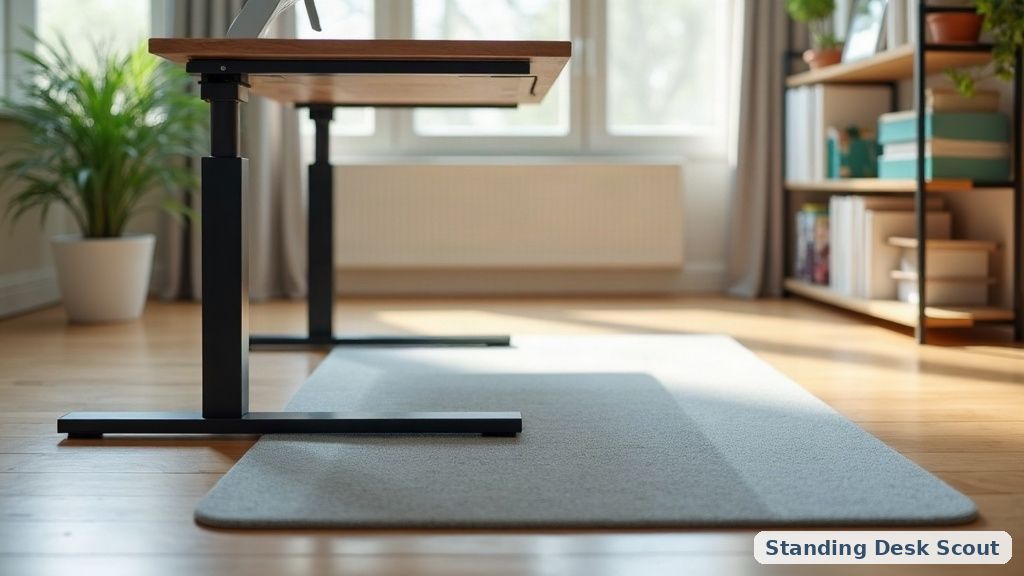
- Use an anti-fatigue mat (see our standing desk accessories guide) so standing invites subtle movement instead of locking you in place.
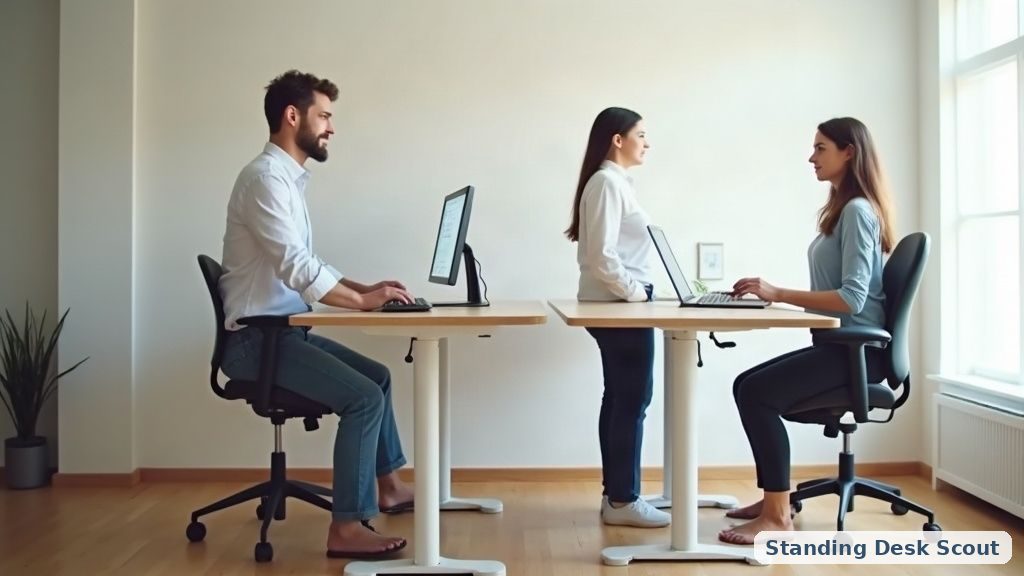
The real trick is alternating sit/stand and moving often — one-press desk presets (like the Monomi) remove the friction, as covered in how long you should stand.
What stretches should I do at a standing desk?
Target the desk-tight areas: neck tilts and shoulder rolls (screen hunch), a chest opener (rounded shoulders), a standing back extension (lower back), and hip flexor + calf stretches (sitting/standing tightness). A few reps, several times a day, keeps you loose. Pair them with regular position changes rather than doing them once and standing still.
Can I exercise at a standing desk?
Yes — calf raises, glute squeezes, weight shifts, squats, and desk push-ups fit between tasks without equipment. They won’t replace a workout, but they break up static posture and boost circulation, which is the actual health goal. Keep them light and frequent; the point is movement, not a sweat session.
How often should I stretch during the workday?
Every 30–60 minutes — pair it with your sit/stand switches so it’s automatic. Set a reminder for the first few weeks until it’s a habit. Frequent short breaks beat one long stretch session; the body dislikes holding any single position too long, standing included.
Does a standing desk fix back pain?
It can help by reducing prolonged sitting, but only if you also move and set it up correctly — standing still all day can cause its own aches. Combine correct desk height, regular alternating, and these stretches. If pain persists, see a professional.
📚 Related In-Depth Analysis
- Compare findings with our guide on Dual Motor Vs Single Motor Standing Desk.
- Compare findings with our guide on Standing Desk Accessories Guide.
📚 Related In-Depth Analysis
- Compare findings with our guide on Dual Motor Vs Single Motor Standing Desks.
- Compare findings with our guide on Anti Fatigue Mat For Standing Desk.
🔧 Interactive Planning Tool
Need exact measurements for your setup? Use our Ergonomic Desk & Monitor Sizing Engine to Calculate standing and sitting desk height ranges based on your exact body stature.
Move more, ache less
Don’t just stand — move. Cycle through neck/shoulder/chest/back/hip stretches a few times a day, sprinkle in calf raises and squats between tasks, alternate sit/stand every 30–60 minutes, and use presets + an anti-fatigue mat to make movement effortless. The healthiest desk worker isn’t the one who stands longest — it’s the one who moves most.
Related: Standing desk vs treadmill desk