Anti-Fatigue Mats for Standing Desks: The Missing Piece (2026)
As an Amazon Associate I earn from qualifying purchases. Prices and availability are accurate as of the date/time indicated and are subject to change.
🔍 How this guide was put together (Editorial Standards)
This guide compares options using published manufacturer specifications, patterns in publicly visible owner reviews, and reputable expert sources. We do not operate a physical testing lab; see our how-we-research page for details.
EDITOR'S PICKS
Top Picks
TOP PICK
RUNNER-UP


📑 Table of contents
People buy a standing desk to fix their back and are surprised when their feet and knees start aching instead. Standing still on a hard floor is its own kind of static load — your weight parks on the same joints and the same patch of sole for hours. An anti-fatigue mat is the piece most people skip, and it’s what turns “standing hurts too” into standing you can actually sustain. But mats aren’t interchangeable, and the wrong one does almost nothing.
Why standing still is the actual problem
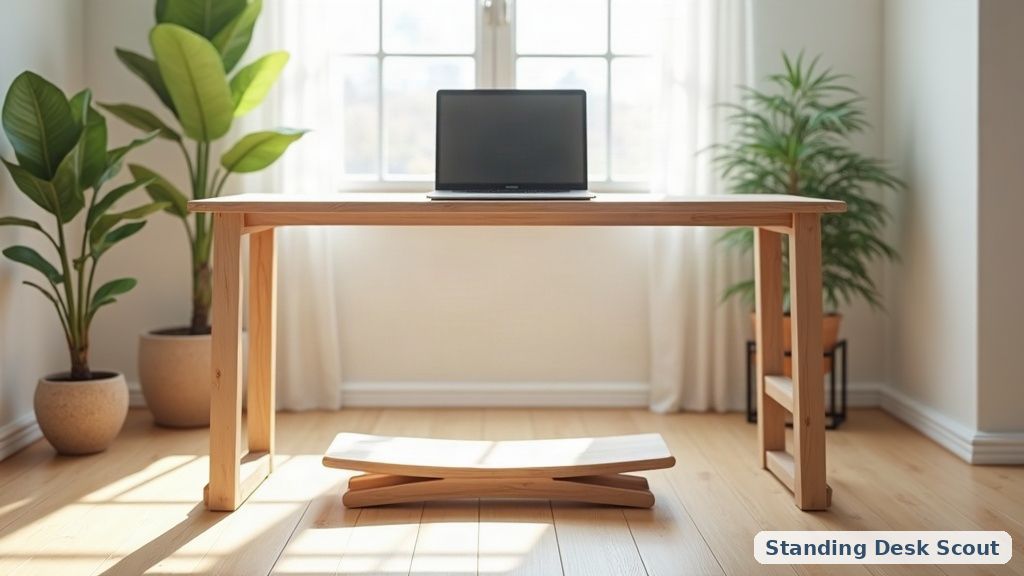
Standing motionless restricts blood flow in your lower legs — the calf muscles only pump blood when they contract. A good anti-fatigue mat works by being slightly unstable: its give forces constant micro-adjustments in your feet and calves, keeping those muscles gently active and the blood moving. That’s why a firm, dead-flat mat helps far less than one with engineered give.
The thickness and firmness sweet spot
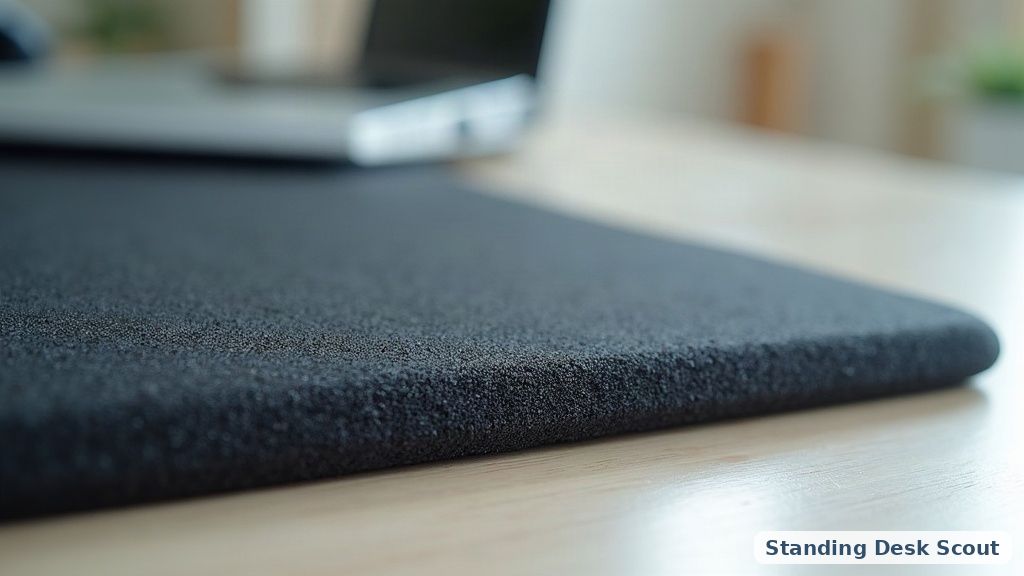
Thickness: ¾ inch (about 19 mm). Thinner than ½ inch and you barely feel it; thicker than 1 inch and it gets unstable enough to feel tippy and stress the ankles. Three-quarters of an inch is the widely used sweet spot.
Firmness: medium, not plush. A mat you sink deep into fatigues you faster because your feet fight for stability the whole time. You want enough give to encourage micro-movement, enough support to stand steady. High-density PU foam or gel holds this balance; cheap EVA foam bottoms out and stays compressed.
How the mat and desk work together
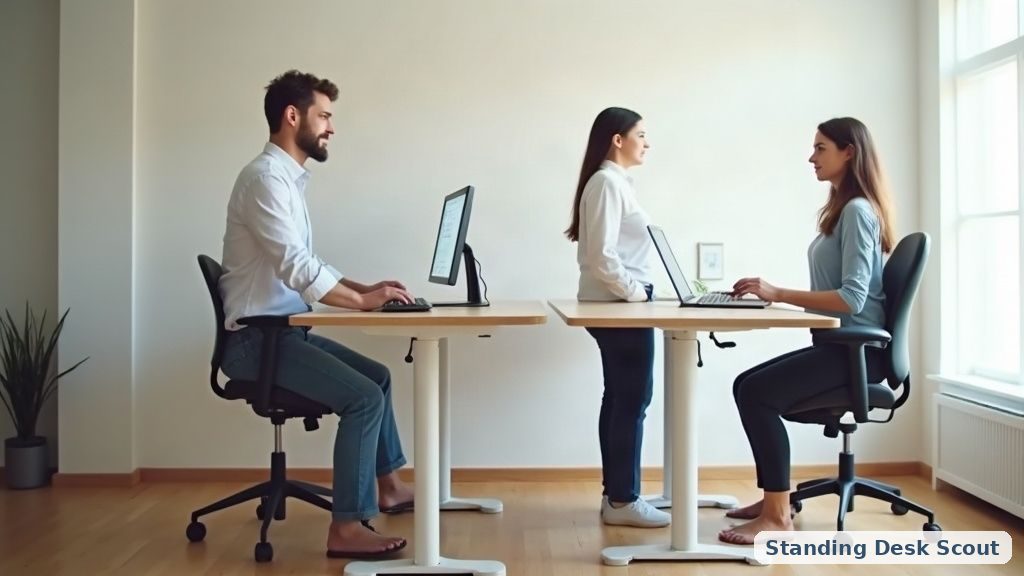
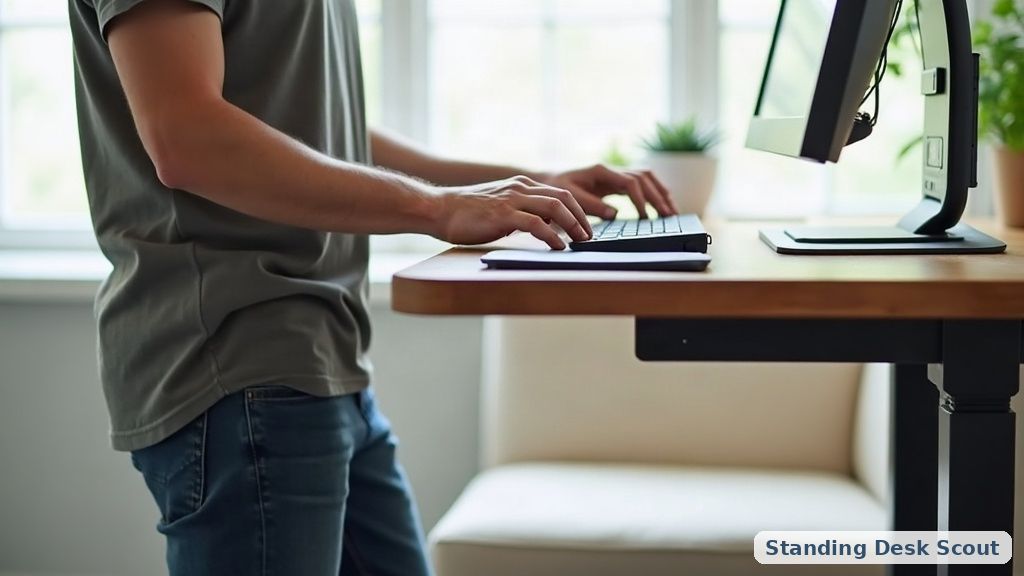
The mat only helps while you’re standing, so it’s really half of a sit-stand system. The right desk height sets your posture; the mat protects your feet during the standing intervals; and you should still alternate sit and stand rather than stand all day. A mat is permission to stand longer comfortably — not to stand constantly.
Do contoured mats with massage bumps help?
Some. Contoured mats with a raised edge, a calf stretch ridge, or foot-massage nubs give you something to do with your feet during long calls, which encourages exactly the micro-movement that keeps circulation up. They’re a nice-to-have, not essential — a plain medium-firm ¾-inch mat already delivers most of the benefit. More options in our standing desk accessories guide.
What size mat should you get?
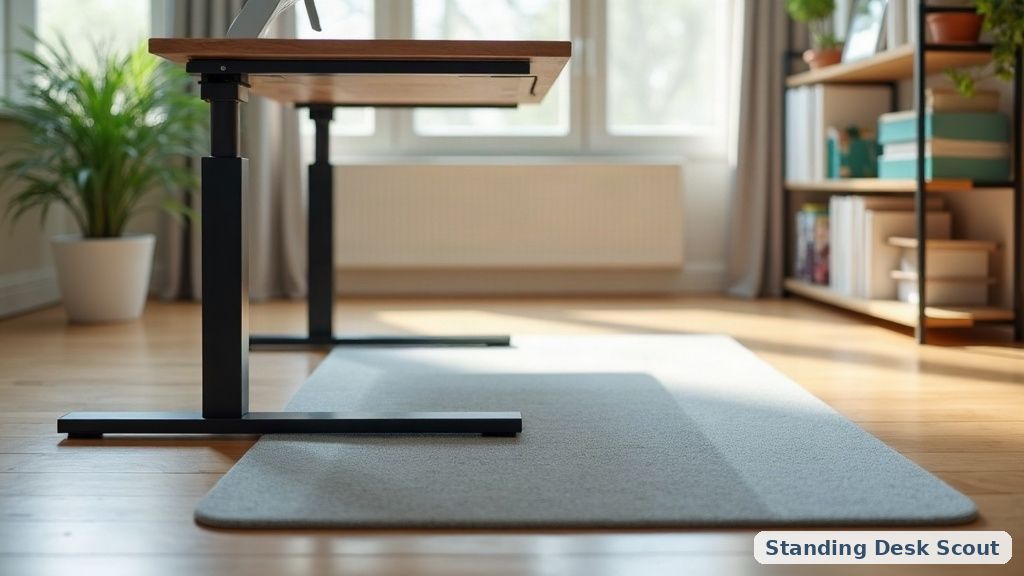
Match it to your movement, not just your feet. If you shift and pace at your desk, a larger mat (at least 20 x 30 in) keeps you on the cushion; if your footprint is fixed, a smaller mat is fine. Whatever the size, a non-slip backing is non-negotiable on hard floors — a sliding mat is a fall risk mid-call.
📚 Related In-Depth Analysis
- Compare findings with our guide on How Long Should You Stand At A Standing Desk.
- Compare findings with our guide on Standing Desk Weight Capacity Guide.
📚 Related In-Depth Analysis
- Compare findings with our guide on Standing Desk Converter Vs Full Desk.
- Compare findings with our guide on Dual Motor Vs Single Motor Standing Desk.
🔧 Interactive Planning Tool
Need exact measurements for your setup? Use our Ergonomic Desk & Monitor Sizing Engine to Calculate standing and sitting desk height ranges based on your exact body stature.
Bottom line
An anti-fatigue mat is the cheapest upgrade that makes a standing desk actually livable. Target ¾-inch thickness, medium firmness, a non-slip backing, and treat it as half of a sit-stand routine — not a license to stand all day. Get the mat right and standing stops being the thing your feet dread.